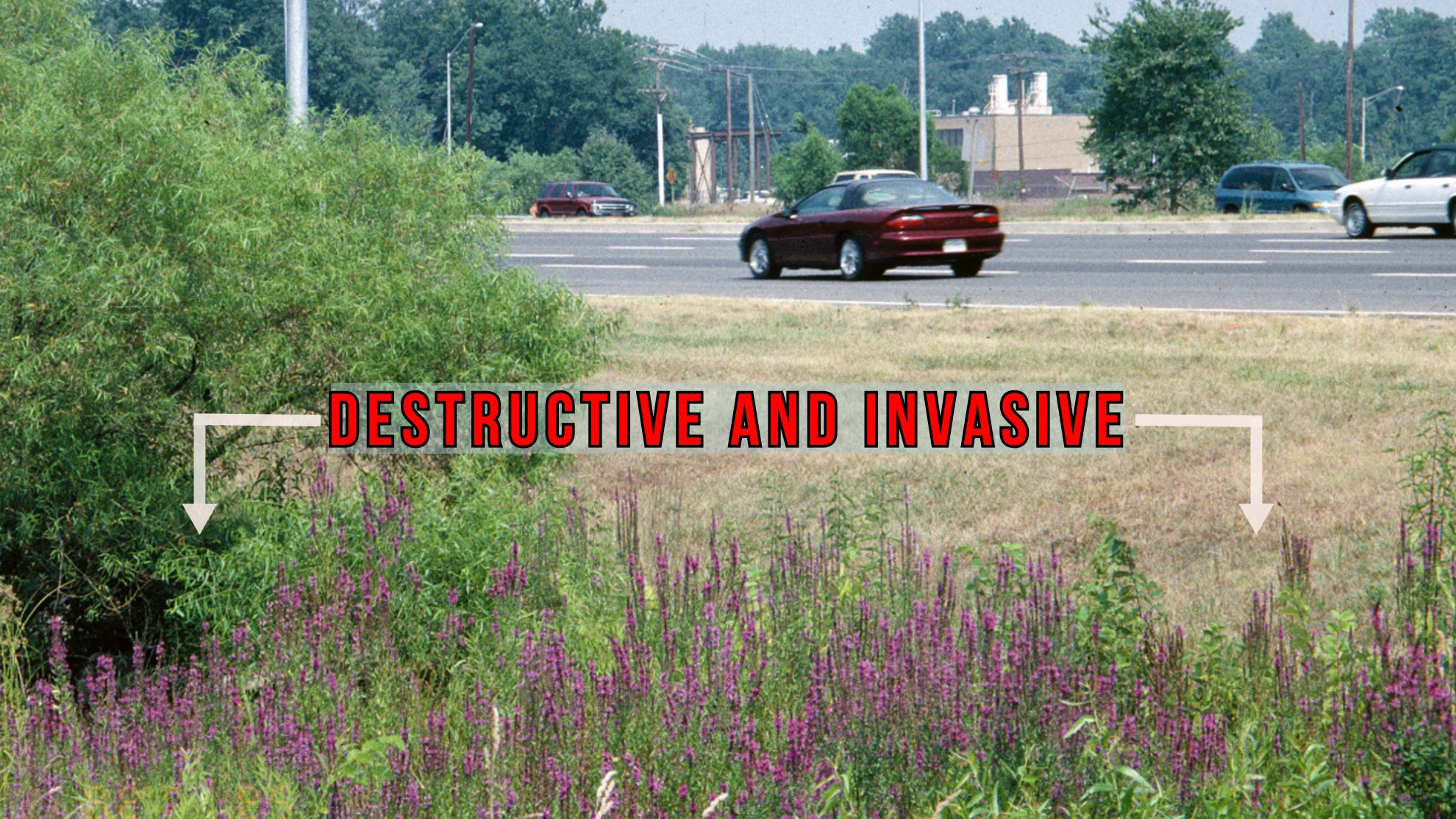
Spot this roadside flower? It’s one of the continent’s most destructive plants

In the right conditions, it can grow up to 3 metres high, choking out native plants, damaging wetlands, and reducing biodiversity.
Parts of southern Ontario and Quebec are starting to see signs of purple loosestrife, according to iNaturalist.
As of June 9, there are only a handful of reports, but in a few weeks’ time, expect to see this bright purple plant on roadsides, in ditches, and in wetlands.
"Most destructive"
Purple loosestrife sports vibrant purple flowers. In the right conditions, it can grow up to 3 metres high, choking out native plants, damaging wetlands, and reducing biodiversity.
Its fast-and-furious spread, largely due to a lack of natural predators, can reduce water flow, making it difficult for native aquatic species to survive. It can also choke out all other plants and turn an area into a single species stand, killing off critical nesting and habitat space.
A mature plant produces upwards of 2.5 million seeds that can survive in the soil for up to 20 years, according to the Invasive Council of B.C.
The seeds spread easily through water and by attaching to wildlife and vehicles.
Purple loosestrife has become so widespread in some areas, like the Great Lakes-St. Lawrence water basin, that it is referred to as one of the most destructive invasive plants in North America by the North American Invasive Species Management Association (NAISMA).
A brief history
Purple loosestrife was introduced to North America in the 1800s. According to Ontario.ca, some of it was released accidentally, making its way here through discarded soil used in ship ballast.
But others brought the plant intentionally to use in their gardens.
How to identify purple loosestrife
Once established, purple loosestrife is hard to remove because it grows via an underground network of stems, or rhizomes.
Individual flowers have between five and seven pinkish-purple petals about 10 mm long, which sit atop flower spikes.
Leaves have smooth edges and are up to 10 centimetres long.
Controlling purple loosestrife
Sometimes, purple loosestrife can be effectively removed by manual pulling or with the help of herbicides.
Parts of Canada and the U.S. have also used biocontrols, i.e., releasing beetle species that target and destroy the plant.
“In 1992, the Canadian and American governments approved the release of two European leaf-eating beetles, Galerucella calmariensis and G. pusilla,” the Government of Ontario says on its website.
“The beetles are natural enemies of purple loosestrife and feed primarily on the plant, although they occasionally eat other species of loosestrife. This biological control of purple loosestrife can reduce populations by up to 90 per cent and allow native plants to re-establish. The beetles were widely released in Ontario, and purple loosestrife populations at many of these sites have been significantly reduced.”
Manitoba has seen great success in reducing the plant with the help of the beetles.
Header image: File photo. (Britt Slattery/US Fish and Wildlife Service)