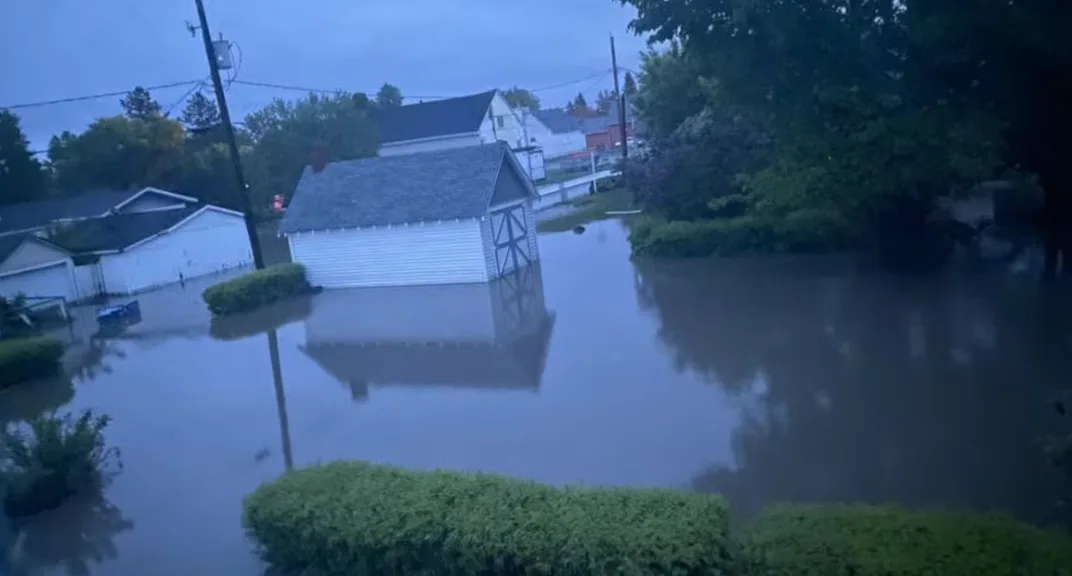
'Everyone is safe,' infrastructure minister says after Manitoba flash floods

Help is on the way for communities in the Swan Valley region that were recently hit by heavy rains, the Manitoba government says.
Staff are being mobilized to help communities and complete initial damage assessments of provincial highway and water infrastructure, a government spokesperson told CBC News in a statement shortly before 6 p.m. Monday.
Up to 150 people were forced out of their homes after flash floods in Swan Valley, which Environment and Climate Change Canada said got about 72 millimetres of rain in only a few hours Sunday night.
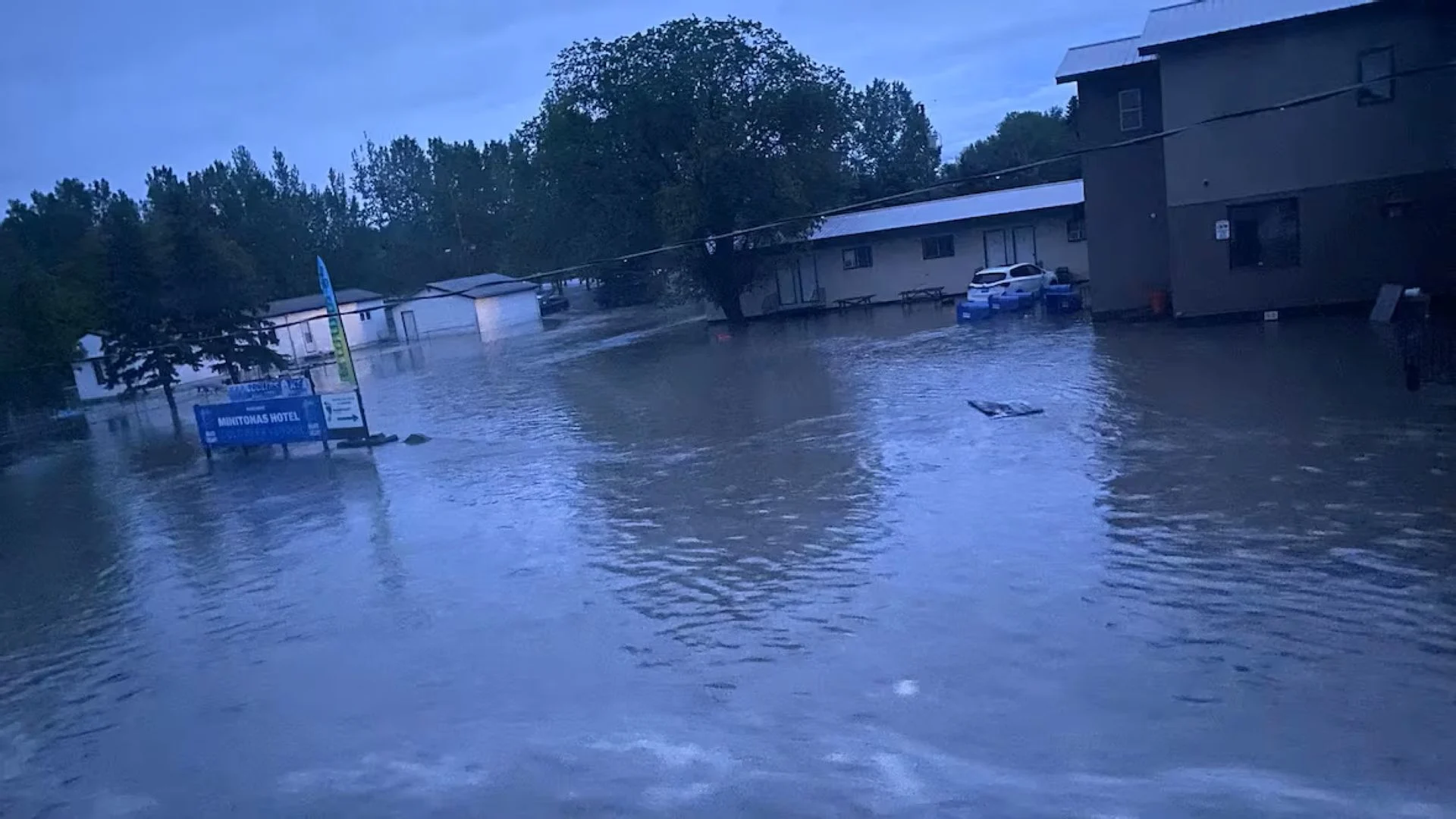
(Alesha-Mai Ferland/Facebook via CBC)
Manitoba Infrastructure Minister Lisa Naylor says emergency management is working with municipalities to ensure food is distributed to people displaced.
"As far as we know, everyone is safe," she told CBC News shortly before 8 p.m.
"There are a couple of folks who are choosing to stay in their homes at this time, but they're in touch with local authorities and they believe that they're safe, and so evacuation isn't the concern at this moment."
Naylor couldn't say where people who left their homes are staying, saying emergency management is sorting through all the logistics with local leadership.
Some homes in Swan Valley West are now being sandbagged, Naylor's office told CBC News around 9 p.m.
The province's hydrologic forecast centre has predicted more precipitation in the region in the next couple days, she said.
If the roads are too damaged to distribute food, the province might consider dropping it into impacted communities via helicopter, Naylor said.
The situation continues to unfold, and the province's response might change by the hour as water continues to flow into the community, the minister said.
"We will look for solutions, and we're going to make sure that the folks in our community have what they need."
The Municipality of Minitonas-Bowsman, which neighbours Swan Valley West, declared a state of local emergency in the aftermath of the flood.
Rob Tomlinson, superintendent of Swan Valley School Division, says the school in Minitonas is dry but staff described it as "an island."
Tomlinson says most of the division's school buses were cancelled for Tuesday and are likely to remain cancelled for the rest of the week.
"We're going to play it day by day," he told CBC News on Monday evening.
A 62-year-old farmer who made a dramatic rescue in the middle of the night says rushing waters washed out his front yard.
Ian McKay, who lives on a farm near the West Favel River, north of Minitonas, used a hydraulic excavator to rescue his wife from their home around 3 a.m. Monday after the water tore a chasm in their yard, he says.
"The river was 12 feet wide when I left home at 6 p.m., and [when] I got home at three in the morning, it was 900 feet wide," he told CBC News on Monday night.
"She came out in her boots, and [the] water was about a foot deep, and [she] jumped up on the track and got onto the machine and rode on the side of the machine, and I drove it back."
Parkland Region flooding Some residents of the municipalities of Swan Valley West and Minitonas-Bowsman have been forced out of their homes in the aftermath of heavy rains over the weekend.
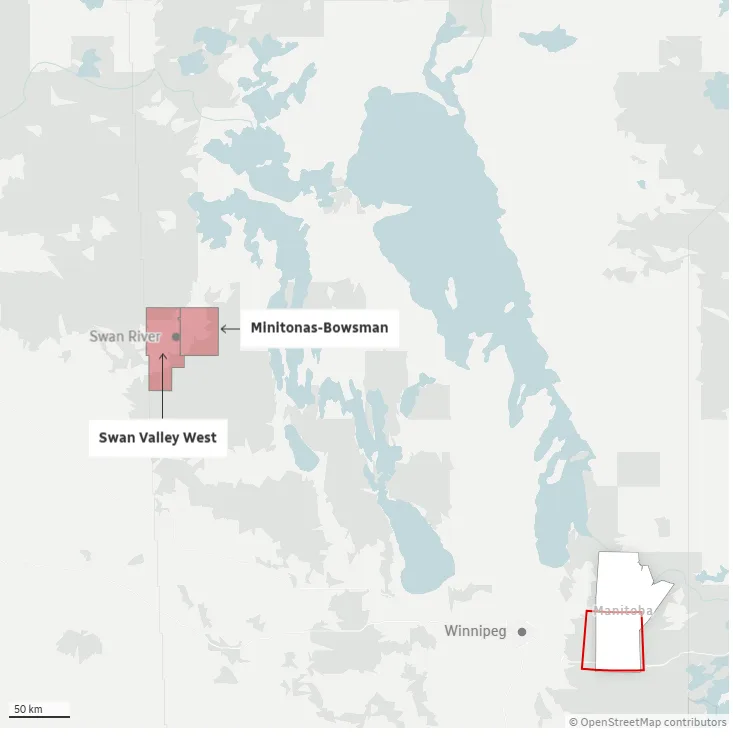
(Arturo Chang/CBC)
McKay says his front yard is "completely gone," and a lot of mud was left in the home.
His wife joked about starting a fundraiser to replace the dirt in their front yard, he said.
"We don't need money. We just need dirt."
'Absolute raging current'
Mark McKay, Ian's son, lives on the east side of the East Favel River. He says he's never seen anything like the flooding.
"It was just an absolute raging current going everywhere and going over every road," he said.
"Thankfully, everybody is OK."
Communities in the area have been dealing with power outages, a gas line rupture, a boil water advisory and a washed-out bridge after severe thunderstorms over the weekend, Swan Valley West Reeve Bill Gade told CBC News.
Some residents who sat on their roofs to stay dry Monday needed to be rescued, he said.
"We used some more heavy equipment to get in there — some farm equipment, actually — to go down the road and get through some water that was just too deep to get through any other way and get to those people," he told CBC Radio's Up to Speed in an interview shortly after 5 p.m.
However, the region is still in "emergency mode," Gade said.
"The water hasn't actually started to recede for us yet, [so] we're hoping that means we're at the peak now."
Damage estimates will likely be millions of dollars, hitting farmers who've just seeded crops after struggling with a late snow melt, Gade said.
"I would hazard a guess that we're probably closing in on tens [of millions], if not $50 million, of damage to farmland here just today."
It's a "heck of a mess," he said.
"We've been talking to a lot of people about just when they've seen anything like this, [and] they tell us 1988 was the last time."
Monday's water levels are nearly two feet higher than the flooding seen in 1988, Gade said.
Thumbnail courtesy of Alesha-Mai Ferland/Facebook.
The story was originally and published for CBC News. With files from Bartley Kives, Rosanna Hempel, Susan Magas and Faith Fundal.